Is Your Hip Really ‘Worn Out’—Or Is Your Weight Silently Pushing You Toward Surgery
Jan 08, 2026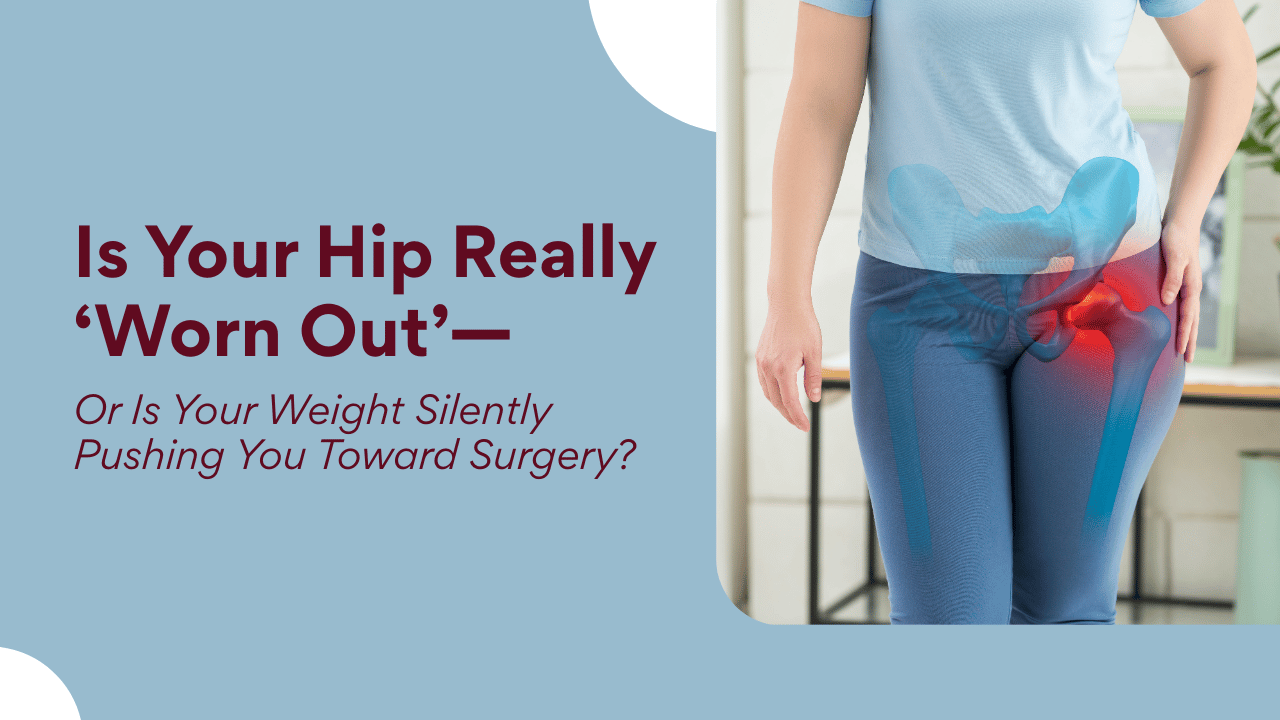
Hip pain when you carry extra weight is not proof that you are “falling apart.” It is your hip joint telling the truth about years of overload, inflammation, and metabolic stress in a system that has been working overtime to keep you moving. When we treat that as a chronic disease process—not as a cosmetic problem—we finally give your hips a real chance to heal instead of just numbing the pain.
When Your Weight Lands in Your Hips
If your hips ache getting out of bed, hurt when you stand from a chair, or burn after a short walk, that is not a character flaw. It is physics and biology teaming up against a joint that takes a huge share of your body’s load.
- If your BMI is in the overweight or obese range, your hip cartilage sees higher contact stress with every step, which speeds up the wear-and-tear plus inflammation cycle that leads to hip osteoarthritis.
- If you carry extra fat, especially around the abdomen, your body is likely releasing more inflammatory chemicals that damage cartilage from the inside out, even when you are sitting still.
- People with higher BMI have a significantly higher risk of hip arthritis, and many need hip replacement earlier than their leaner peers.
Your hips are not weak; they are over-exposed to load and inflammation in a body that has been fighting a long metabolic battle.
Could Some Hip Replacements Be Avoided?
Not every hip can be saved by lifestyle change; advanced structural damage, fractures, and certain mechanical deformities absolutely need surgical solutions. But when obesity is a primary driver, the trajectory is often not “broken hip, replace it,” but “overloaded hip, deteriorating for years.”
- Obesity brings hip arthritis on earlier in life, which is one reason people in larger bodies tend to require hip replacements at younger ages.
- Excess weight does not just increase the chance of needing surgery; it also increases the risk of complications like dislocation, blood clots, infections, and longer hospital stays after hip replacement.
On the other hand, intentional weight loss—especially around 10% or more—can meaningfully improve hip pain, function, stiffness, and hip-related quality of life, with bigger improvements seen the more weight is lost. The point is not to blame you for your weight; it is to show you there is leverage.
What Really Changes Hip Pain (Beyond Pills and Injections)
Most quick-fix approaches focus on the joint itself: pain meds, injections, maybe a brief burst of physical therapy. That can quiet symptoms, but it does not touch the mechanical and metabolic roots.
- When structured weight loss is combined with targeted exercise in people with hip arthritis, improvements in pain, walking ability, and daily function become much more meaningful.
- There is a clear dose-response pattern: the more unwanted weight people lose (safely and intentionally), the better their hips feel and move.
This is why, in your January work, you focus on precision food, blood sugar stability, muscle, and nervous-system safety first; those are the levers that shift the disease, not just the symptoms.
Three Things You Can Start This Week
Here are simple, hip-respectful steps you can take right now, while we keep our eyes on the long game.
- Create a Gentle Hip-Saving Deficit (Without Starving)
If you are carrying extra weight and your hips hurt, the goal is not to crash diet; it is to consistently send your body the message to release fat while protecting muscle.
- Aim for a small, sustainable daily calorie deficit: tighten up evening snacking, remove sugary drinks and ultra-processed treats, and make each meal roughly ½ non-starchy vegetables, ¼ clean protein, ¼ smart starch or extra vegetables.
- Track “hip outcomes,” not just the scale: how easily you put on socks, how far you can walk before pain spikes, how it feels to climb stairs. Those are the wins that tell you your joints are benefiting.
You are not dieting to fit into smaller jeans; you are easing the load and inflammation on a joint that has been carrying too much, too long.
- Shift from Impact to Supported Strength
If you stop moving because your hips hurt, you lose muscle, and that makes every step more painful—a vicious cycle. The answer is not more pounding; it is smarter, better-supported movement.
- Swap high-impact or high-twist activities (running, deep lunges, jumping) for supported options: flat cycling, water walking or jogging, gentle elliptical, or short, frequent flat walks you can recover from.
- Add 2–3 short strength sessions per week focused on glutes, core, and hips: mini-squats to a chair, hip bridges, side-lying leg lifts or band walks, and supported hip hinges. Think of it as building a muscular “exoskeleton” that shares the work your hip joint is trying to do alone.
You do not have to “work out” hard; you have to show your hip, gently and consistently, that it is supported.
- Cool the Internal Fire With Food
If obesity is contributing to your hip pain, your joints are sitting in the same inflammatory soup as the rest of your body. Your plate is one of the fastest ways to cool that down.
- Build most meals around anti-inflammatory basics: colorful vegetables, berries, herbs and spices (especially turmeric, ginger, garlic), omega-3-rich foods (like wild fish, flax, chia), and high-quality proteins that fit your values and biology.
- Cut back on the known “joint agitators”: sugary drinks, sweets, refined flours, and heavily processed snack foods, which spike blood sugar and stoke inflammatory pathways that accelerate cartilage breakdown.
Tiny shifts here, repeated daily, change the chemistry your hip cartilage is swimming in.
If you recognize yourself in this—aching hips, extra weight, and a long history of “just lose a few pounds” advice that never really helped—please know this: your hip is not failing because you lack willpower; it is responding to years of load and metabolic stress in a body that has been trying to protect you. You are welcome to book a wellness visit or consultation so we can look at your hips, your weight story, and your options together, and build a calm, precise plan that aims to keep you moving—and, when possible, out of the operating room.
Overwhelmed by pieces of advice, not a real plan?
Dr. Laleh Talebian, Ph.D. helps you make sense of the fragments (labs, nutrition, strength, lifestyle, and the questions that still don’t fit together), then builds a clear, evidence-informed plan around your situation so you can take the next steps with more clarity, not more noise.
About the Author