Tired but Wired? How Cortisol, Blood Sugar and Your Body Clock Affect Sleep
Nov 02, 2026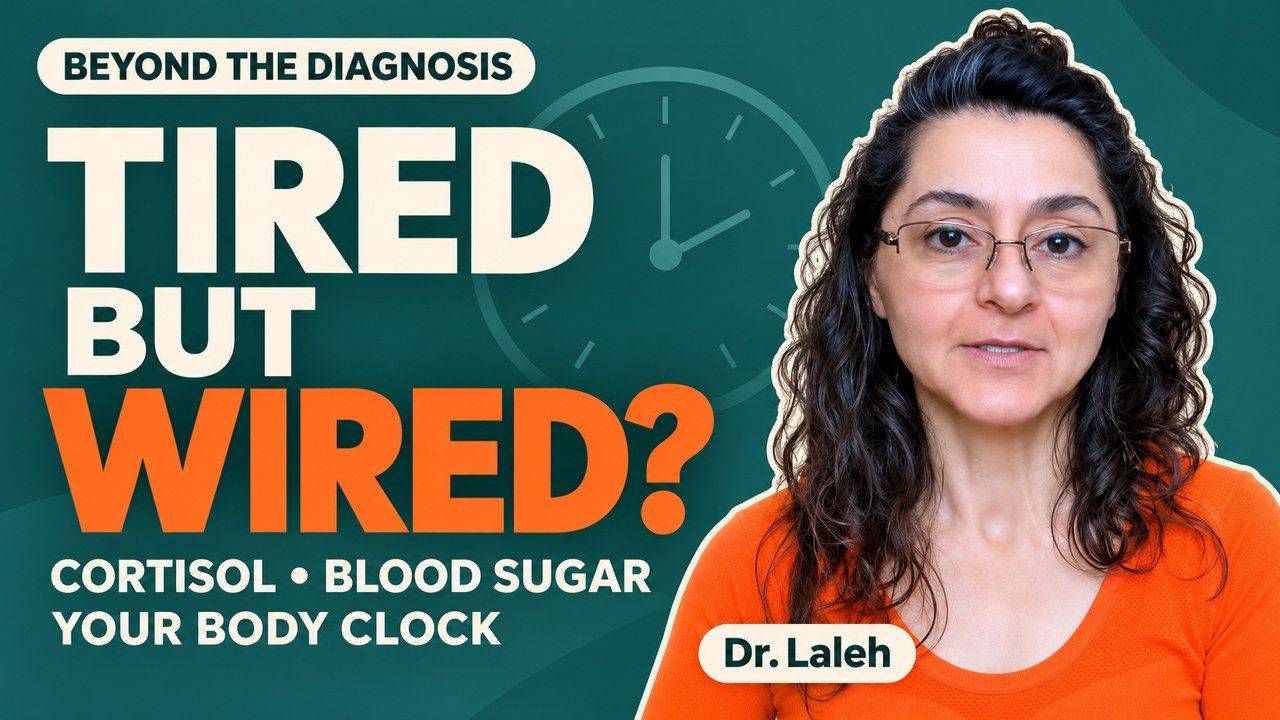
By Dr. Laleh Talebian, Ph.D., founder of DNA Wellness (Dynamic Natural Advantage)
You drag yourself through the afternoon, counting the hours until bedtime. But when you finally turn off the lights, your mind starts racing.
Or perhaps you fall asleep easily, only to wake up at 3 a.m., feeling alert when you desperately want to rest.
That "tired but wired" feeling can be frustrating. Understanding it starts with looking beyond bedtime to the patterns throughout your day.
In this episode of Beyond the Diagnosis, I explore how stress, your sleep-wake rhythm, blood sugar and everyday habits can influence your ability to get restorative sleep.
Why Can You Feel Exhausted but Still Struggle to Sleep?
Feeling tired and being ready to fall asleep are related, but they aren't identical.
Your need for sleep builds while you're awake. At the same time, your internal body clock helps regulate when you feel alert and when you feel sleepy. When those signals don't line up with your schedule, you may feel exhausted during the day and more awake at night.
Consider what your body experiences throughout a typical day:
- Do you spend most of the morning indoors?
- Does caffeine help you get through an afternoon slump?
- Are you answering messages or working late into the evening?
- Does bedtime arrive immediately after a busy, brightly lit evening?
These patterns are useful clues. They offer a starting point for understanding what may be interfering with your rest.
How Does Cortisol Affect Sleep?
Cortisol is often called the stress hormone, but it also plays a normal role in helping you wake up. Your body's daily rhythm coordinates alertness signals, including cortisol, with sleep signals such as melatonin. Light and darkness help guide that process.
Stress is one factor to consider when you feel alert at bedtime. However, racing thoughts or nighttime waking alone cannot tell you whether your cortisol levels are abnormal.
Rather than assuming one hormone explains everything, look at the broader picture: your routine, medications, symptoms, stress and health history. A qualified clinician can help determine whether testing is appropriate.
Supporting Your Body Clock With Light and Consistency
Your circadian rhythm is your internal timing system. Light is one of its strongest environmental cues. Bright artificial light late in the evening can interfere with the signals that help prepare you for sleep.
A practical place to begin is creating a clearer difference between daytime and nighttime:
- Spend time outside during the day. Make daylight part of your routine instead of spending the entire day under indoor lighting.
- Keep your schedule consistent. Aim for similar bedtimes and wake times, including on weekends.
- Create a quieter evening. Dim bright lights, reduce screen exposure and give yourself time to transition out of work or other stimulating activities. These habits are consistent with NIH guidance for supporting healthy sleep.
People naturally differ in their preferred sleep timing. The goal is to find a routine that supports your needs and daily responsibilities.
The Connection Between Sleep and Blood Sugar
Sleep belongs in conversations about metabolic health.
Insufficient sleep can make your body use insulin less efficiently. Even one night of too little sleep can affect blood sugar regulation. That is one reason sleep deserves attention alongside nutrition and movement.
However, waking at 3 a.m. does not automatically mean your blood sugar has dropped. Nighttime waking has many possible explanations, and the time on the clock is not a diagnosis.
If you notice a recurring pattern, record what happens: when you wake, how you feel, your evening routine and any relevant symptoms. Bring that information to your healthcare professional rather than guessing at the cause.
What About Food Before Bed?
In the video, I discuss meal timing and several food options, including kiwi, pumpkin seeds, nuts and fruit paired with almond butter.
Think of these as foods to consider within your overall eating pattern, rather than guaranteed sleep remedies. A bedtime snack is not necessary for everyone.
A useful first step is noticing whether hunger or an uncomfortable late meal seems to interfere with your rest. NIH guidance recommends avoiding large meals close to bedtime. Caffeine and alcohol can also disrupt sleep, even when alcohol initially makes you feel drowsy.
Your nutritional needs, medications and health conditions should guide any changes.
Should You Take Melatonin or Magnesium?
It's understandable to want something that helps tonight. But choosing a supplement without understanding the sleep problem may leave important questions unanswered.
In this episode, I discuss why melatonin and magnesium deserve an individual conversation. Whether either is appropriate depends on your situation, including other medications and health conditions.
Persistent insomnia also deserves more than repeated trial and error. Cognitive behavioral therapy for insomnia, known as CBT-I, is usually recommended as the first treatment for long-term insomnia. It addresses the thoughts and behaviors that can keep sleep difficulties going.
Start With One Change You Can Repeat
You don't need to overhaul your entire routine tonight.
Choose one manageable action: turn down the lights earlier, put your phone away during your wind-down period or make time to get outdoors during the day.
Then pay attention. What changes? What remains difficult? What patterns become clearer?
Your sleep experience provides information worth discussing. Ongoing problems, especially snoring, gasping during sleep or significant daytime sleepiness, deserve professional evaluation.
Prefer to watch? See the full episode on YouTube.
Explore Your Health With DNA Wellness
I'm Dr. Laleh Talebian, Ph.D., founder of DNA Wellness (Dynamic Natural Advantage). My work considers your health history, lifestyle and individual needs as part of a broader conversation about your well-being.
If you'd like to explore how sleep fits into your overall health picture, book an Initial Consultation.
Join me for Beyond the Diagnosis, live every Thursday at 5 p.m. Eastern Time, for conversations about the questions behind your symptoms.
This article is for educational purposes only and does not provide medical advice. Consult a qualified healthcare professional about persistent sleep problems and before changing medications or supplements.
Overwhelmed by pieces of advice, not a real plan?
Dr. Laleh Talebian, Ph.D. helps you make sense of the fragments (labs, nutrition, strength, lifestyle, and the questions that still don’t fit together), then builds a clear, evidence-informed plan around your situation so you can take the next steps with more clarity, not more noise.
About the Author