Too Tired to Lose Weight? How Broken Sleep Quietly Sabotages Your Brain, Hormones, and Waistline
Jan 05, 2026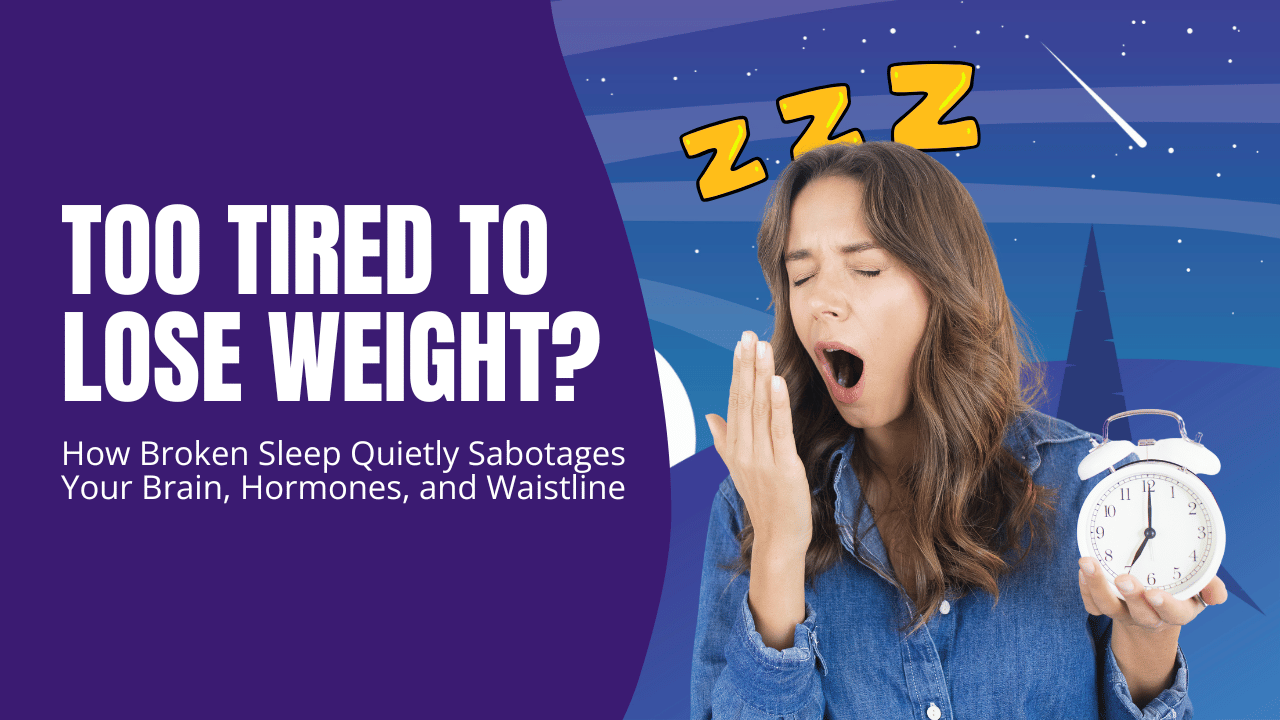
If you wake up tired, drag through the day in a fog, and still lie awake wired at night, it can feel like your body is working against you. In reality, excess weight and poor sleep often lock you into a vicious loop—your weight disrupts your sleep, your broken sleep scrambles your brain and hormones, and those changes quietly push you toward more weight gain, more fatigue, and more frustration. This is not vanity; this is a chronic metabolic and neurological condition that deserves real treatment, not just more willpower.
How Extra Weight Hijacks Your Sleep
If you are overweight or obese and you wake unrefreshed, snore, gasp, or toss and turn all night, your sleep architecture is almost certainly under attack.
Extra fat around the neck, chest, and abdomen can narrow your airway and compress your lungs when you lie down, increasing the risk of obstructive sleep apnea and shallow breathing.
Visceral fat drives chronic inflammation and alters appetite and stress hormones, which can fragment sleep, shorten deep sleep, and make it harder to stay asleep through the night.
Being heavier also often means more reflux, joint pain, and hot flashes or night sweats—all of which can wake you repeatedly and prevent the brain from getting the long, uninterrupted cycles it needs to repair itself.
Your “bad sleep” is not just a bad habit; it is often a direct byproduct of how your weight is interacting with your airway, hormones, and nervous system.
What Broken Sleep Does to Your Brain and Hormones
Once sleep is disrupted, the fallout shows up in your mind, your appetite, and your stress chemistry.
When you are sleep-deprived, your brain’s prefrontal cortex (the part that makes good decisions) goes offline while the more primitive, reward-seeking parts light up—this is why that box of cookies or late-night scrolling suddenly feels impossible to resist.
Short or poor-quality sleep lowers leptin (your “I’m full” hormone) and raises ghrelin (your “I’m hungry” hormone), increasing cravings, especially for sugar, starch, and high-fat comfort foods.
Fragmented sleep raises evening cortisol and other stress signals, which can cause blood sugar swings, muscle breakdown, and more belly-fat storage, even if your food intake has not dramatically changed.
You are not weak for craving carbs when you are exhausted; your brain and hormones are literally screaming for quick energy and comfort.
The Foggy Brain, Chronic Fatigue, Weight-Gain Spiral
If this continues night after night, you do not just feel tired—you start to feel like a different person.
Poor sleep impairs attention, working memory, reaction time, and emotional regulation, so you feel more forgetful, more irritable, less resilient, and less “sharp.”
Chronic sleep debt leaves your body in a state of low-grade stress: higher cortisol, higher inflammation, sluggish thyroid and sex hormones, and a nervous system that never really powers down.
That combination—brain fog, fatigue, pain, and hormonal chaos—makes it harder to exercise, harder to cook, harder to plan, and easier to overeat or skip self-care, which leads to more weight gain, more sleep disruption, and a bigger metabolic fire.
This is why you may feel like you are doing “everything right” and still gaining weight: you are fighting a 24-hour physiological storm, not just making choices in a vacuum.
Three Steps You Can Start This Week
Here are simple, non-overwhelming actions you can take right away to start breaking this loop, while you and your care team work on deeper, long-term root causes.
1. Protect a Non-Negotiable Sleep Window
If you have gained weight and your sleep is chaotic, the first step is not a perfect routine; it is a consistent opportunity to sleep.
Choose a realistic 7–8-hour window and guard it most nights (for example, 10:30 p.m. to 6:00 a.m.), even if you are not sleeping perfectly yet. Go to bed and get up at roughly the same times—this trains your internal clock.
Within that window, create a 30-minute “wind-down” ritual: dim lights, screens off, a hot shower or bath, light stretching, breathing, or a short calming audio. This is not about being perfect; it is about telling your nervous system, “We are safe; it is time to power down.”
You do not have to fix your sleep overnight; you only need to start giving it a consistent, protected place in your day.
2. Eat for Nighttime Hormones, Not Just Daytime Calories
If you are overweight and tired, the timing and composition of your food can either calm or inflame your night.
Aim to finish your last substantial meal 2-3 hours before bed and avoid going to sleep on a heavy, high-sugar, or highly processed snack; that late glucose and insulin spike makes it harder to get deep, restorative sleep.
Build your evening meal around protein, fiber, and healthy fats (for example: salmon or lentils, a big pile of non-starchy vegetables, and some olive oil or avocado) to stabilize blood sugar through the night and reduce 2 a.m. hunger or reflux.
Think of your dinner as a hormone intervention, not just “what’s quick.”
3. Screen for Sleep Apnea and Start Gentle Morning Light + Movement
If you snore loudly, wake up choking, or feel exhausted even after 7–8 hours in bed, you may not just be a “bad sleeper”—you may have sleep apnea, which is tightly linked to excess weight.
Talk with your clinician about a sleep study if you have signs like snoring, gasping, headaches on waking, or needing multiple naps to function.
Each morning, within an hour of waking, get a small dose of daylight and gentle movement—5–10 minutes of outdoor walking or stretching near a window. That combination tells your brain “this is daytime,” anchors your circadian rhythm, and, over time, helps your body produce melatonin at night when you need it most.
If you recognize yourself in this—excess weight, broken sleep, brain fog, and a body that feels older than you are—please hear this clearly: you are not lazy, and you are not broken. You are living inside a biology that has been pulled off-track by a chronic disease, not a cosmetic flaw. If you want help unwinding that loop in a calm, data-driven, compassionate way, you are welcome to schedule a wellness visit or consultation so we can look at your sleep, your hormones, and your weight story together and design a plan that finally lets your brain and body rest.
Overwhelmed by pieces of advice, not a real plan?
Dr. Laleh Talebian, Ph.D. helps you make sense of the fragments (labs, nutrition, strength, lifestyle, and the questions that still don’t fit together), then builds a clear, evidence-informed plan around your situation so you can take the next steps with more clarity, not more noise.
About the Author