
What Does Lisinopril Actually Do?
Sep 23, 2026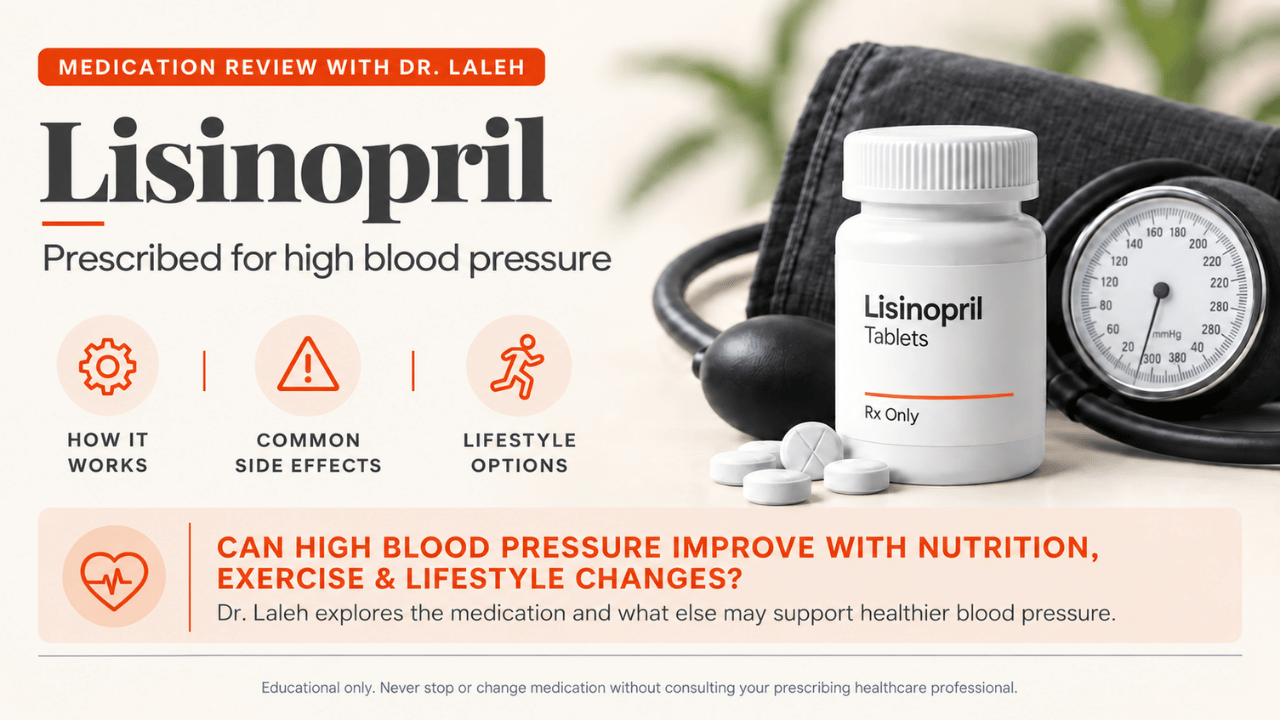
LISINOPRIL — Your blood pressure medication may be doing exactly what it was prescribed to do.
But lowering the number does not automatically explain why that number became elevated in the first place.
Your blood pressure medication may be doing exactly what it was prescribed to do.
But lowering the number doesn’t automatically explain why the number became elevated in the first place.
That distinction matters.
Lisinopril is an ACE inhibitor commonly prescribed for high blood pressure. It is also used in certain people with heart failure or after a heart attack.
What is ACE? Angiotensin Converting Enzyme. The medication blocks the body’s enzyme that converts Angiotensin into a form that raises your blood pressure.
It works by interfering with a hormonal system that normally causes blood vessels to constrict. The result: blood vessels can relax, making it easier for blood to flow and helping lower blood pressure.
That can be extremely valuable.
But here is the question I want more people asking:
What else is influencing your blood pressure?
Blood pressure can be affected by multiple factors, including nutrition patterns, sodium intake, body weight, physical activity, alcohol, sleep, smoking, other medical conditions, genetics and more.
That means medication and lifestyle are not rivals.
For many people, they are part of the same conversation.
Some important things to know about lisinopril include:
- A persistent dry cough can occur
- Blood pressure can sometimes become too low, causing dizziness or lightheadedness
- Potassium can rise
- Kidney function may need monitoring
- Rarely, serious swelling of the lips, tongue, face or throat (called angioedema) can occur and requires urgent medical attention
- Lisinopril can harm a developing fetus and carries a serious pregnancy warning
And one detail many people miss:
Potassium-containing salt substitutes are not automatically a good idea just because you are trying to reduce sodium. If you take lisinopril, ask your clinician before using them.
Instead of simply asking, “Is my blood pressure controlled?” consider asking:
- What factors may be contributing to my hypertension?
- What does my home blood pressure trend show?
- How much sodium am I actually getting from packaged and restaurant food?
- What role could movement, weight, sleep or alcohol be playing for me?
- What should we monitor while I take this medication?
Medication may be part of the answer. It should not automatically end the investigation.
Never stop or change your blood-pressure medication without working with the clinician who manages it.
Understanding your medication is part of understanding your health.
Educational information only. This is not individualized medical advice.
About the Author
Dr. Laleh Talebian, Ph.D., is a molecular biologist and the founder of DNA Wellness. She helps people navigating cancer, Parkinson’s, metabolic disease, and other complex conditions understand the broader health picture and build practical, evidence-informed next steps through a personalized, holistic approach.
