
When “Just a Little” Additive Isn’t So Little Anymore
Jun 23, 2026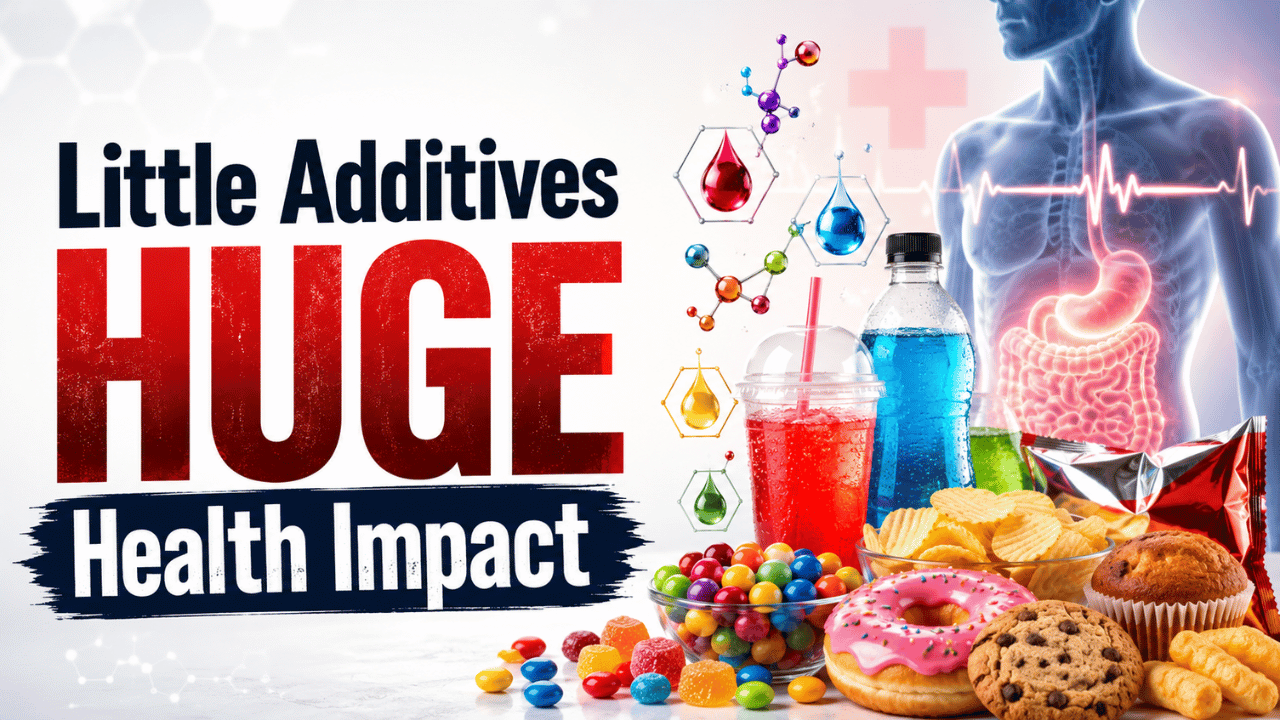
For years, many of my patients have heard the same reassuring line:
“Don’t worry, it’s just a little preservative… just a bit of color.”
But new large-scale research is confirming what many of us in functional and nutritional medicine have suspected for a long time: those “little extras” in your food are not neutral. They are not invisible. And over time, they may quietly increase your risk for exactly the diseases you’re trying to avoid.
Recently, a team of French researchers following more than 100,000 adults over many years published three landmark studies on common food colorings and preservatives and their relationship to cancer, type 2 diabetes, cardiovascular disease, and hypertension.
Their conclusion is simple and sobering: our exposure to many additives is widespread, unnecessary—and far from harmless.
What These New Studies Actually Found
Let’s start with the facts in clear, human language.
Researchers used detailed 24‑hour dietary records, brand-level food tracking, and additive databases to estimate how much of each additive people were consuming over time. Then they looked at who developed chronic disease and who did not, adjusting for factors like age, smoking, weight, and overall diet quality.
Here are some key findings:
- People who consumed the most food colorings had a higher risk of type 2 diabetes—about 38% higher than those who consumed the least.
- Specific colorings, including beta‑carotene (E160a), ordinary caramel (E150a), curcumin (E100), and anthocyanins (E163), were each individually associated with even higher diabetes risk in the highest consumers (in the 40–49% range).
- Overall food colorings were also linked to higher cancer risk: a 14% increase in overall cancer, a 21% increase in breast cancer, and a 32% increase in post‑menopausal breast cancer among higher consumers.
- Beta‑carotene as a food additive (not the natural carotenoids in whole foods) was associated with a 16% higher risk of overall cancer and a 41% higher risk of breast cancer, while ordinary caramel was linked to a 15% higher risk of overall cancer.
- Preservatives as a group were associated with a 24% higher risk of hypertension in those with the highest intakes.
- Non‑antioxidant preservatives were linked to a 29% higher risk of hypertension and a 16% higher risk of cardiovascular disease; antioxidant preservatives were linked to a 22% higher risk of hypertension.
- Among common preservatives, potassium sorbate (E202) and citric acid (E330) stood out with notably higher hypertension risks, and ascorbic acid (E300) was associated with higher cardiovascular disease risk.
These are not tiny signals from a small lab experiment. These associations come from a large, long-term, real‑world cohort, and they line up with mechanistic and animal data suggesting that many of these substances can impact inflammation, oxidative stress, metabolic regulation, and vascular health.
Do these studies “prove” that a single additive causes a specific disease in a specific person? No.
Do they strongly support what many patients feel in their bodies—that ultra‑processed, additive‑heavy foods erode health over time? Absolutely.
Why This Matters More Than Just “Clean Eating”
This is about more than avoiding neon-colored candy.
These additives are deeply woven into everyday products people think of as harmless: flavored yogurts, deli meats, sauces, “healthy” snack bars, diet drinks, sports beverages, low‑fat convenience foods, and even items marketed as “natural” or “fortified.” They are markers of ultra‑processed foods—the very products that dominate many modern diets.
There are three key reasons this matters:
- Exposure is constant, not occasional. A few bites once a year isn’t the issue. It’s the daily, invisible drip of multiple additives from breakfast to bedtime.
- The burden is cumulative and synergistic. You are rarely exposed to just one additive at a time. You’re often consuming mixtures, day after day, layered on top of stress, poor sleep, environmental toxins, and medications.
- Your body is already doing a lot. Detoxification, repair, hormone balance, immune surveillance—these systems are working around the clock. Additive overload is like asking an already overworked team to run double shifts, indefinitely, without backup.
In my practice, I see this show up as “mystery” symptoms—fatigue, headaches, brain fog, digestive issues, blood pressure creeping up, blood sugar becoming harder to manage—long before a formal diagnosis appears.
From a root‑cause perspective, these studies are a powerful reminder: ultra‑processed, additive‑heavy foods are not simply “empty calories.” They are active exposures that can nudge the body away from resilience and toward disease.
My Philosophy: Precision Over Prescriptions
This is where my core philosophy comes in: food is information, not just fuel. And that information can either whisper “heal, repair, calm” or shout “inflame, destabilize, overwhelm.”
I do not believe in fear‑mongering around food. I do believe in precision, honesty, and empowerment.
When we look at your labs, your genetics, your inflammatory markers, your metabolic profile, and your lived experience, we’re not just asking, “What disease label do you have?” We’re asking:
- What daily inputs are overloading your system?
- What additives, preservatives, and hidden ingredients are your biology reacting to?
- Where can we remove friction so your body can do what it is designed to do—heal and rebalance?
The new data on colorings and preservatives reinforces a simple truth that guides my work: when we reduce unnecessary chemical noise in the diet, we free up healing capacity.
Instead of adding more medications to control blood pressure or blood sugar while continuing to flood the body with ultra‑processed foods, we ask a different question:
“What happens if we clear out the interference and give your cells what they actually recognize as food?”
Practical Steps: Turning Research into Action
You do not need to memorize E‑numbers or become a full‑time label detective to benefit from this research. Small, consistent upgrades—in the right direction—change trajectories.
Here are steps I often use with patients:
- Move along the processing spectrum. Shift from ultra‑processed to minimally processed. Trade flavored yogurt for plain yogurt with your own added fruit; boxed snack cakes for a handful of nuts and berries; highly processed deli meats for home‑cooked meats or legumes.
- Choose foods with short, recognizable ingredient lists. If the list reads like a chemistry lab—multiple E‑numbers, stabilizers, artificial colors, “modified” this and that—treat it as an occasional item, not a daily staple.
- Be especially mindful of “health halo” products. “Low‑fat,” “sugar‑free,” or “fortified” often comes with a longer list of additives. The marketing is healthy; the ingredient list is not.
- Support your detox and repair systems. Colorful vegetables, high‑quality proteins, healthy fats, adequate hydration, fiber, movement, and sleep all support your body’s ability to process what it encounters—intended or not.
- Notice how you feel. When you reduce additive‑heavy foods even for a few weeks, pay attention: energy, digestion, skin, headaches, cravings, mood. Your body is constantly giving you data.
Remember, this is not about perfection. It is about direction. Even a 20–30% reduction in ultra‑processed, additive‑dense foods can be meaningful over time, especially when paired with a personalized, nutrient‑dense plan.
From Data to Your Personal Plan
What I love about these studies is that they validate both science and intuition. Many people already sense that brightly packaged, ultra‑processed foods leave them feeling unwell, even when their labs are “normal.” Now we have robust, long‑term data linking specific classes of additives to increased risks of diabetes, cancer, cardiovascular disease, and hypertension.
But population data is only the starting point. The real transformation happens when we connect this evidence to your unique biology:
- Your genetic susceptibilities
- Your lab trends over time
- Your symptoms and history
- Your medications and exposures
- Your goals and values
From there, we can design a plan that does more than just avoid the “bad stuff.” We build a pattern of eating that actively communicates safety, stability, and repair to your body.
Because you don’t need another prescription layered on top of an inflammatory lifestyle.
You need a strategy.
You need clarity.
You need a partner who will help you remove what harms, restore what heals, and listen to what your body has been trying to say all along.
If you’re ready to move beyond generic advice and into a precise, personalized approach to nutrition and disease prevention, this is exactly the work I do every day.
It’s time to stop guessing and start healing. Schedule your consultation today.
