Break Up With Bread: Why It’s Time to Rethink Grains, and What to Eat Instead
Aug 22, 2026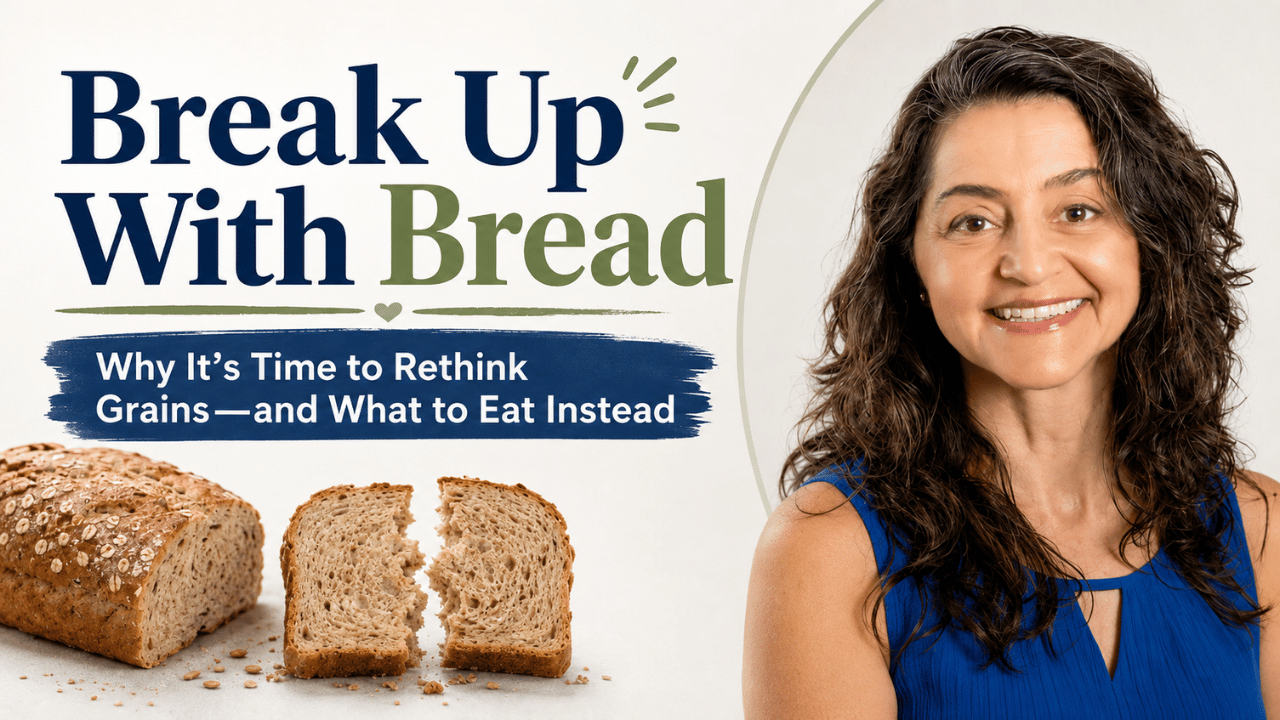
Bread is often treated as a harmless everyday staple, but modern packaged breads can be far removed from simple flour, water, salt and fermentation. Beyond the question of gluten or refined flour, some baked products may contain additives used to strengthen dough, improve rise and create the soft texture consumers expect from commercial bread.
My philosophy is straightforward: grains were never meant to be the foundation of the human diet. When we choose carbohydrates, I believe we are better served by turning to whole, minimally processed starchy plants, especially roots and tubers, rather than relying on flour-based foods that dominate the modern food environment.
The Modern Bread Problem
Bread is convenient, inexpensive, and familiar, which is exactly why it became such a large part of the standard diet. But convenience is not the same as nourishment.
Many packaged breads, buns, tortillas, bagels, crackers and baked snacks are made with refined flour and a long list of processing aids, preservatives, sweeteners, oils and dough conditioners. One additive receiving renewed attention is potassium bromate, an ingredient used to make dough stronger, improve its rise and help create a uniform, high-volume loaf.
Potassium bromate is not added because it makes bread more nutritious. It is used to create a product that performs better commercially: dough that is easier to work with, bread that rises higher and loaves that look soft and consistent on store shelves.
That should give us pause.
If an ingredient is not necessary for nourishment and raises safety concerns, avoiding it is a reasonable choice. Food should not require a chemistry lesson to understand. Ideally, a loaf of bread would contain recognizable ingredients: flour, water, salt and perhaps yeast or a sourdough starter, not a long list of additives designed to maximize appearance, shelf life and manufacturing efficiency.
Grains Are Not a Nutritional Requirement
Humans need energy, protein, healthy fats, vitamins, minerals and fiber. But we do not need bread, pasta, cereal, crackers or other grain-based foods specifically.
For much of human history, people ate the foods available in their natural environments: animal foods, fish, fruit, leaves, nuts, seeds, roots, tubers and seasonal plants. Grains became more common as agriculture expanded because they were calorie-dense, easy to store and efficient to grow at scale.
Those qualities helped populations survive and grow. But being easy to cultivate and store is not the same thing as being the ideal foundation for optimal health.
Modern nutrition has often taught us to see grains as essential, especially whole grains. Yet many people find they feel better when they stop building meals around bread, cereal, pasta and snack foods made from flour. Instead, they choose protein, vegetables, nourishing fats and whole-food sources of carbohydrates.
This shift often leads to fewer processed foods, less added sugar, fewer refined oils and less exposure to additives. It can also help people become more aware of hunger, fullness and the difference between true nourishment and food designed to keep us eating.
Why Grains Can Be Inflammatory
Not every person reacts to grains in the same way, and not every grain-containing food has the same effect. But for many people, grains, particularly modern wheat and refined flour products, can contribute to digestive discomfort, unstable energy, cravings, and inflammation.
People with celiac disease must avoid gluten entirely. Others may experience symptoms from wheat or gluten even when they do not have celiac disease. Bloating, fatigue, skin issues, joint discomfort, headaches and digestive changes are some of the complaints people commonly report when they do not tolerate these foods well.
Refined grain products can also create a cycle of blood sugar spikes and crashes. A breakfast of toast, cereal, pastries or bagels may provide a quick burst of energy, but it often does not keep someone satisfied for long. Hunger returns quickly, cravings increase, and the body asks for another fast source of carbohydrate.
When grains become the center of the diet, they can crowd out foods that provide more protein, minerals, healthy fats, and micronutrients. It becomes easy to eat a lot of calories while still feeling undernourished.
Better Sources of Complex Carbohydrates
Carbohydrates come from plant foods, including fruits, vegetables, legumes, roots, tubers, seeds and grains. But not all carbohydrates affect the body in the same way, and not all plant-based carbohydrate foods need to play the same role in the diet.
My preference is to get complex carbohydrates primarily from starchy roots and tubers rather than from grains and flour-based foods. Roots and tubers provide satisfying, whole-food carbohydrates along with water, fiber, potassium, and other vitamins and minerals. They are simple foods that grow from the ground and can be prepared without the refining, additives, and industrial processing commonly used in modern bread and grain products.
Excellent options include:
- Potatoes
- Sweet potatoes
- Yams
- Cassava
- Taro
- Plantains
- Parsnips
- Turnips
- Rutabagas
- Beets
- Carrots
- Winter squash
- Pumpkin
These foods provide carbohydrates in a nourishing whole-food package. A roasted sweet potato with olive oil, salt and herbs can replace toast at breakfast. A baked potato can replace a sandwich bun or pasta side dish. Winter squash can be added to soups, salads and stews. Plantains, cassava and taro can bring variety for people who want more traditional starch options.
For active people, those with higher calorie needs or people transitioning away from bread-heavy eating, roots and tubers can be especially useful. They provide satisfying energy while supporting a more nutrient-dense, minimally processed diet.
Seeds Are Not the Same as Grains
It is also helpful to recognize that not every food commonly called a “grain” is actually a true cereal grain.
Quinoa, buckwheat and amaranth are often placed in the grain category, but botanically they are seeds or pseudocereals. They are different from traditional cereal grains such as wheat, rye, barley, corn, rice and oats.
Some people may tolerate these seed-based foods better than conventional grains. Others may choose not to eat them at all. The point is not that everyone needs to include them, but that our food categories are often overly simplistic.
When people reduce or remove conventional grains, they still have many options for nourishing carbohydrate sources: roots, tubers, squash, fruit and selected seeds. There is no need to rely on bread as the default carbohydrate at every meal.
Bread Without Grains
I do not recommend making grain-based bread part of a healthy diet, even occasionally. Conventional breads, including many products marketed as “whole grain,” are still flour-based foods that can contribute to cravings, digestive discomfort, blood-sugar swings, and inflammation for sensitive individuals.
Instead of trying to find the “best” wheat bread or a cleaner version of a grain-based product, I encourage people to reconsider whether bread needs to come from grains at all. There are ways to enjoy bread-like foods made without conventional grains, using ingredients that better align with a whole-food, grain-free approach.
The goal is not deprivation. It is learning how to build meals around foods that support steady energy, satisfaction, and digestion, without relying on wheat, refined flour or grain-based convenience foods.
If you are ready to move away from grain-based bread but are not sure what to eat instead, I invite you to schedule a consultation. Together, we can explore practical grain-free bread alternatives, identify carbohydrate sources that work for your body, and create a realistic eating approach that supports your individual health goals.
The Bigger Message
The concern about questionable additives in bread is a reminder that food quality matters. We should not have to investigate whether a basic loaf of bread contains an unnecessary chemical added for volume, appearance or shelf appeal.
But the bigger issue goes beyond any one ingredient.
Modern grain-based foods are often highly processed, easy to overeat and woven into nearly every meal and snack. They can displace more nutrient-dense foods and may contribute to digestive discomfort, unstable energy and inflammation for people who are sensitive to them.
My approach is not about fear or perfection. It is about returning to simpler foods: quality protein, vegetables, fruits, healthy fats, roots, tubers and carefully selected seeds.
These are foods that are easier to recognize, more nutrient-dense and more aligned with the way humans ate before grain-based convenience foods became the center of the plate.
Bread may be traditional, but it does not have to be essential. We can choose carbohydrates that nourish us without making processed flour the foundation of our diet.
Overwhelmed by pieces of advice, not a real plan?
Dr. Laleh Talebian, Ph.D. helps you make sense of the fragments (labs, nutrition, strength, lifestyle, and the questions that still don’t fit together), then builds a clear, evidence-informed plan around your situation so you can take the next steps with more clarity, not more noise.
About the Author