Living With Multiple Chronic Conditions: How to Look Beyond Each Diagnosis
Sep 29, 2026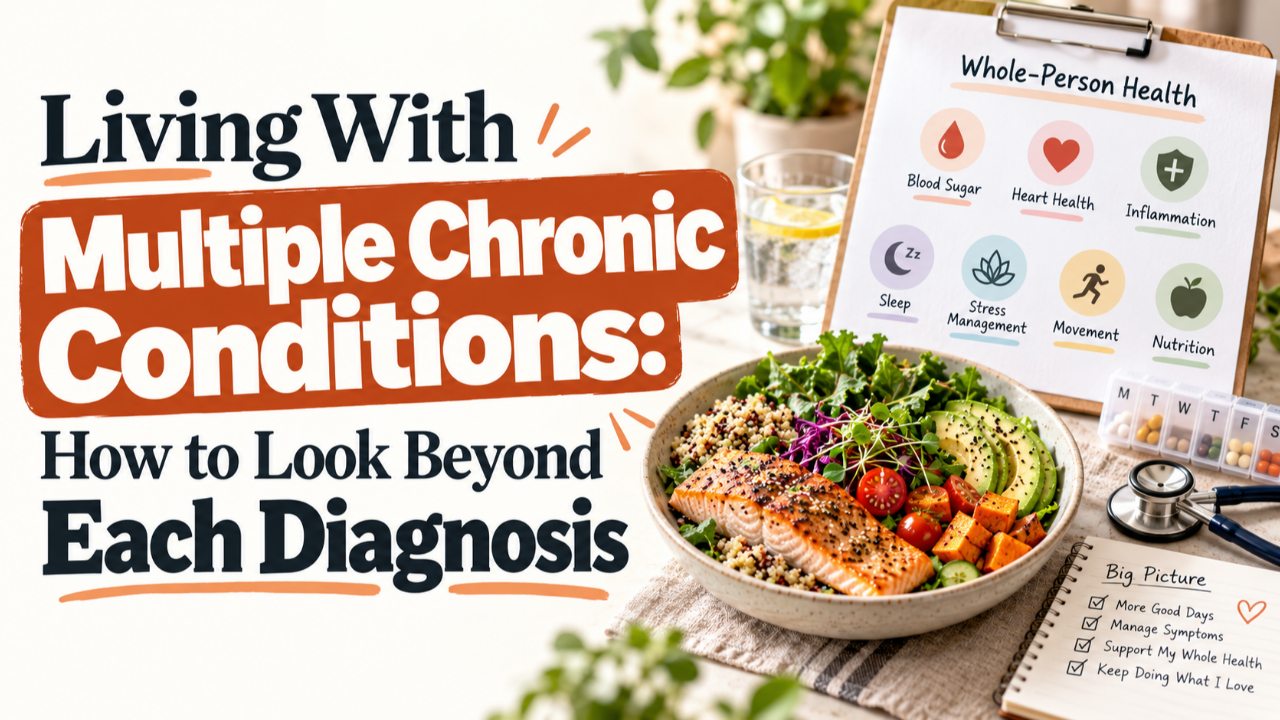
If you live with more than one chronic condition, your calendar may already feel like a series of separate appointments, each focused on a single organ system or label. One visit covers blood pressure. Another covers joints. Another covers blood sugar, digestion, hormones, or mood. Somewhere in the middle, you are the only person holding the full list: the medications that interact, the foods that help one symptom and aggravate another, the fatigue that never quite fits one chart, and the sense that something important is still being missed.
That feeling is common. It is also a signal that looking beyond each diagnosis, one at a time, may be more useful than collecting another isolated tip. Complex chronic health is rarely a single-story problem. Nutrition, metabolism, muscle and strength, sleep, stress load, labs, medications, supplements, and genetics (when relevant) can overlap in ways that no single specialty visit has time to map.
Here are practical points to understand, notice, and ask about when your health picture feels fragmented.
1. Separate diagnoses can share common drivers.
Inflammation load, poor sleep, low muscle mass, inconsistent protein intake, blood sugar swings, digestive issues, and chronic stress do not politely stay inside one disease category. Improving one of those shared factors can sometimes ease strain across several symptoms. That does not mean every condition has the same cause. It means your daily biology is connected. A helpful question is: “Which patterns show up across my conditions?” rather than only What is the protocol for Condition A and Condition B?”
2. Conflicting advice is a systems problem, not a personal failure.
One source says eat more often. Another says fast. One says rest. Another says push exercise. One adds supplements. Another warns against them. When you have multiple conditions, those contradictions multiply. Sorting them requires context: your history, tolerances, lab trends, medication list, and goals. Lifestyle-first, integrative, and conventional options can all be valid paths depending on what you want and what fits your situation. Informed choice gets easier when advice is filtered through your data instead of treated as universal truth.
3. Medications and supplements deserve a whole-person review.
Each prescription or product may have been added for a good reason at the time. Over years, the stack can grow. Side effects, nutrient depletion patterns, appetite changes, sleep disruption, and interactions are easy to miss when every clinician sees only part of the list. You do not need to assume something is “wrong.” You do benefit from a clear inventory:
- What am I taking, and why did I start it?
- What symptoms improved, stayed the same, or appeared afterward?
- Are any supplements duplicating each other or lacking a clear purpose?
- How do timing and food intake affect how I feel on these regimens?
Clarity here often reduces overwhelm more than adding another product.
4. Energy, strength, and body composition are legitimate clinical clues.
When people juggle several diagnoses, “I am just getting older” or “I am just tired” can hide meaningful shifts in muscle, metabolic flexibility, hydration, or recovery capacity. Noticing stair tolerance, grip strength, afternoon crashes, swelling, or unexplained weight change gives you concrete language for what is happening. Nutrition quality and resistance-based movement (scaled to your ability) frequently belong in the same conversation as labs and symptom tracking. The point is not perfection. It is protecting capacity for the life you want to live.
5. Personalized investigation creates a priority map.
With complex chronic conditions, trying to fix everything at once usually backfires. A better first step is ranking what is most limiting right now: sleep, pain flares, digestion, blood sugar volatility, muscle loss, brain fog, or medication burden. Then investigate the factors most likely connected to that priority. Dr. Laleh Talebian, Ph.D., works with people who want that wider lens, bringing a molecular and cellular biology background to an evidence-informed, personalized approach. Same diagnosis labels do not mean the same biology, and they do not require the same plan.
You can explore how this support is described on the Complex Chronic Conditions page. If you want a conversation that looks at the whole picture rather than one label at a time, you can schedule an Initial Consultation. Reviewing services first is also fine if you prefer to understand the options before booking.
You deserve answers that respect complexity without drowning you in noise. Looking beyond each diagnosis is not about rejecting any form of care you choose. It is about seeing the connections that make your health make more sense, so your next steps can be clearer, more personal, and more sustainable.
This article is for educational purposes and does not diagnose, treat, cure, or prevent any disease. Individual needs vary. Decisions about nutrition, lifestyle, supplements, or medications should be made with appropriate professional guidance for your situation.
Overwhelmed by pieces of advice, not a real plan?
Dr. Laleh Talebian, Ph.D. helps you make sense of the fragments (labs, nutrition, strength, lifestyle, and the questions that still don’t fit together), then builds a clear, evidence-informed plan around your situation so you can take the next steps with more clarity, not more noise.
About the Author