Your Body Doesn’t Take Labor Day Off: The Work It Does Every Day
Sep 07, 2026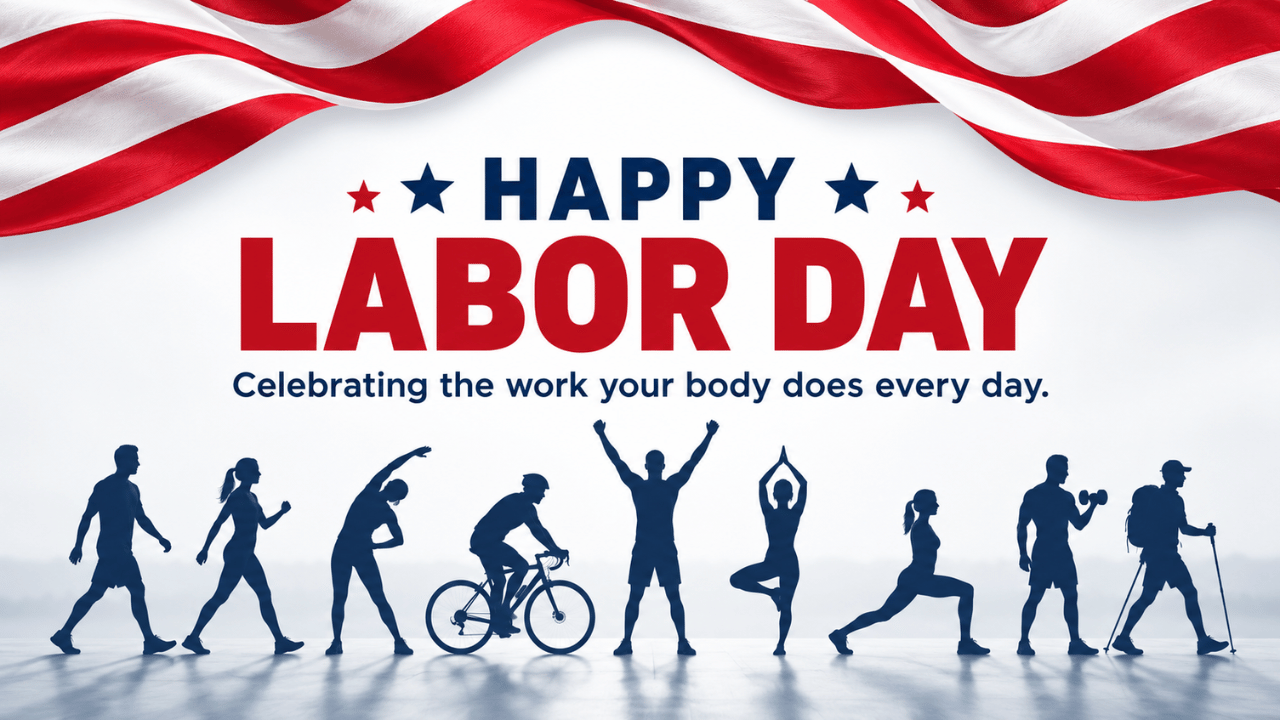
This Labor Day, while we celebrate the work people do, take a moment to recognize something else that rarely gets our attention: the extraordinary amount of work your body is doing for you every day.
Your heart keeps beating.
Your lungs keep exchanging oxygen.
Your brain continues processing information.
Your muscles help you stand, walk, lift, balance, and move through your life.
Your metabolism is constantly managing and responding to the nutrients and energy available to you.
And even while you sleep, your body has not simply “shut down.”
It is still working.
The question is:
How are you supporting the body that works for you every day?
Your Body Is Constantly Responding
We often think about health only when something goes wrong.
A lab value changes.
Our blood pressure starts creeping upward.
We gain weight.
Our strength begins declining.
We receive a diagnosis.
Suddenly, health becomes something we have to pay attention to.
But your biology did not begin changing the day a diagnosis appeared.
Your body has been responding to your internal and external environment all along.
Food provides biological information.
Movement creates biological demands.
Sleep affects multiple systems involved in physical and mental health.
Stress can influence physiology and behavior.
Genetics may affect susceptibility and how individuals respond to some of those signals.
Medical conditions, medications, treatments, age, environment, and many other factors can influence the picture as well.
That is why health is rarely as simple as:
“Eat better.”
“Exercise more.”
“Take this supplement.”
Your biology is personal. Your strategy should be too.
Movement Is More Than Burning Calories
For years, exercise has been marketed primarily as something we do to burn calories or change the way our bodies look.
That dramatically undersells what movement actually means to human health.
Regular physical activity is associated with benefits for cardiovascular health, metabolic health, sleep, brain health, bones, muscles, and everyday physical function. Current U.S. physical-activity guidance recommends that most adults work toward a combination of aerobic activity and muscle-strengthening exercise, while emphasizing that even smaller increases in activity can provide benefits.
That means the walk you take after dinner is not simply about calories.
The resistance training you do is not simply about building bigger muscles.
The stairs you climb, groceries you carry, and movements you practice are all asking your body to maintain capabilities that become increasingly important as you age.
Movement is a biological signal.
And your body adapts to the demands you repeatedly place on it.
Muscle Is Doing More Work Than You Think
Muscle is another part of health that we tend to think about cosmetically.
I want you to think about it differently.
Muscle is health infrastructure.
It helps you get out of a chair.
Carry groceries.
Climb stairs.
Recover your balance.
Move independently.
Continue participating in the life you want to live.
Strength training can improve muscular strength and physical function, and maintaining strength becomes increasingly important for mobility and independence as we age.
This becomes even more important when someone is living with chronic disease, recovering from illness, going through treatment, or becoming less active because of pain, fatigue or other limitations.
The goal is not for everyone to become a bodybuilder.
The goal is to ask:
What do I want my body to still be capable of doing 10, 20 or 30 years from now?
That is a very different health conversation.
Sleep Isn’t Your Body Doing Nothing
We also tend to treat sleep as the part of the day when nothing is happening.
Biologically, that is not true.
The National Heart, Lung, and Blood Institute notes that during sleep, the body is actively supporting healthy brain function and physical health. Sleep also interacts with cardiovascular, metabolic, immune, and other physiological systems.
So when you protect your sleep, you are not being unproductive.
You are giving your body something it requires to do its work well.
That is another important reframe:
Rest is part of health building.
More is not always better.
Harder is not always healthier.
The goal is creating an environment in which your body has the resources, stimulus, and recovery it needs.
And Food? It’s More Than Fuel
Food certainly provides energy.
But food also provides protein, fats, carbohydrates, vitamins, minerals, fiber, and thousands of other compounds that interact with human physiology.
That is why I often say:
Food is biological information.
The question is not simply:
“How many calories are in this?”
It is also:
What nutrients am I giving my body?
Am I getting adequate protein for my individual needs?
Am I eating foods that support my metabolic health?
Am I getting enough fiber and nutrient-dense foods?
Does this strategy make sense for my medical history, medications, diagnosis, and goals?
And importantly, what works well for one person may not be appropriate for another.
Someone undergoing cancer treatment with poor appetite has different nutritional priorities than someone trying to improve insulin resistance.
Someone with kidney disease may require different considerations than a healthy adult trying to build muscle.
Personal context matters.
If You Already Have a Diagnosis, This Matters Even More
This is where I want to be especially clear.
Building health does not mean pretending medicine is unnecessary.
It does not mean believing lifestyle can prevent or control every disease.
And it certainly does not mean blaming someone for becoming ill.
Medical treatment can be essential.
But treating a disease and supporting the health of the person living with that disease are not opposing ideas.
Both can matter.
If you have cancer, Parkinson’s disease, diabetes, cardiovascular disease, an autoimmune condition or another chronic health concern, your diagnosis changes the health conversation.
It does not have to end it.
There may still be questions worth asking about:
- your muscle and strength
- your metabolic health
- your nutrition
- your sleep
- your ability to move
- your cardiovascular fitness
- your laboratory trends
- your medications and potential nutrition considerations
- your individual risk factors
- your quality of life
- the functions you most want to preserve
DNA’s approach is built around precisely this distinction: a diagnosis provides important information, but it does not automatically answer every question about what else is influencing the individual or what can safely be supported.
Your diagnosis is not the end of the health conversation.
You Don’t Need to Change Everything Today
This is where wellness advice often becomes overwhelming.
Exercise every day.
Change your diet.
Fix your sleep.
Reduce your stress.
Take supplements.
Track everything.
Do everything perfectly.
That is not what I am asking you to do.
Instead, this Labor Day, ask yourself one question:
What is one thing I can do to better support the body that works for me every day?
Maybe it is taking a walk.
Maybe it is beginning age- and health-appropriate strength training.
Maybe it is building a meal around more nutrient-dense foods.
Maybe it is finally protecting your bedtime.
Maybe it is scheduling the medical appointment you have been postponing.
Maybe it is asking your physician about a laboratory trend you do not understand.
Maybe it is asking for help because the generic advice you have been following does not seem to fit your body or your situation.
You do not need perfection.
You need awareness.
Then investigation.
Then intentional action.
What Are You Building?
Labor Day gives us an opportunity to recognize and appreciate work.
So today, I hope you enjoy the holiday.
Rest.
Spend time with people you love.
Move because your body allows you to experience your life, not because you are trying to punish it.
Eat food you enjoy.
And take a moment to appreciate what your body is doing behind the scenes every second you are alive.
Then ask yourself:
What am I doing to support the body that works for me every day?
Because whether you are working to prevent disease, living with a diagnosis, recovering from treatment or simply trying to remain strong and independent as you age, your health story is still being written.
You cannot control every chapter.
But there may be more you can influence than you realize.
Your future health is being built today.
Stop Managing Disease. Start Building Health.
Overwhelmed by pieces of advice, not a real plan?
Dr. Laleh Talebian, Ph.D. helps you make sense of the fragments (labs, nutrition, strength, lifestyle, and the questions that still don’t fit together), then builds a clear, evidence-informed plan around your situation so you can take the next steps with more clarity, not more noise.
About the Author