What’s on Your Plate? The Emerging Link to Parkinson’s
Aug 15, 2026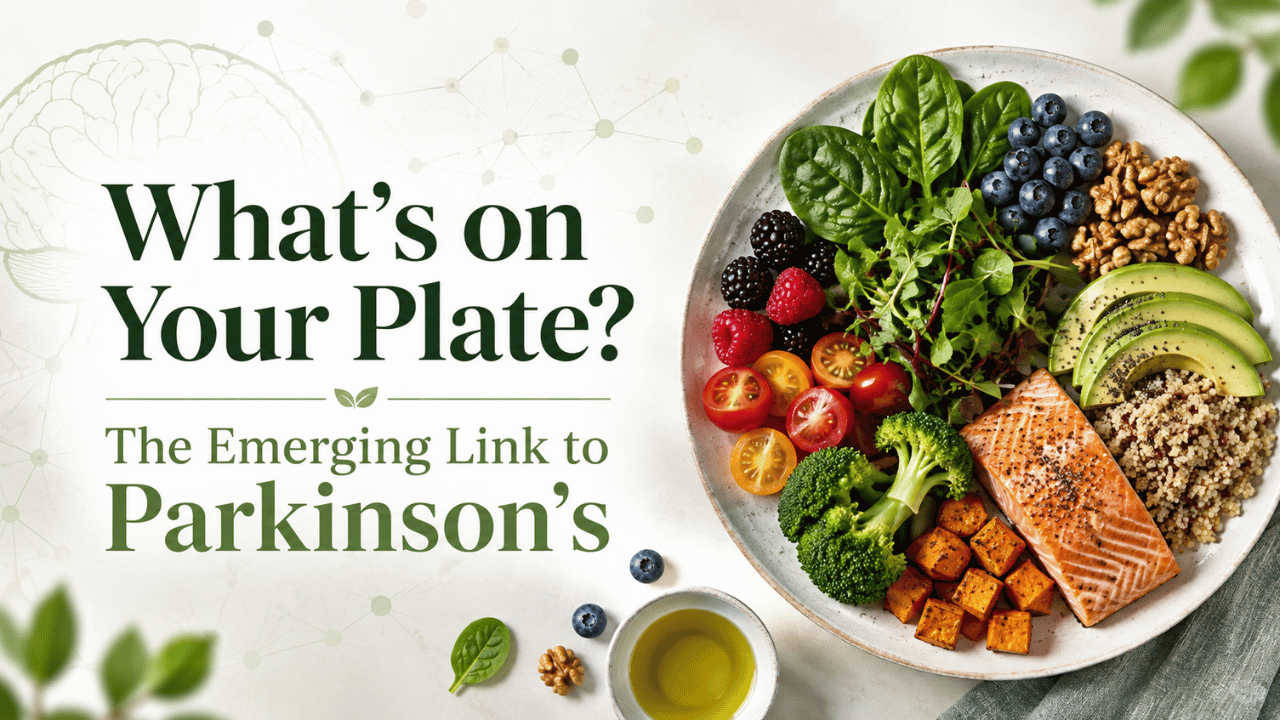
When we talk about food and Parkinson’s, it’s important to start with what we don’t know: no single food causes Parkinson’s disease, and no single way of eating can guarantee prevention.
But emerging research gives us another meaningful reason to look at the role ultra-processed foods may play in long-term brain health.
Ultra-processed foods are the highly manufactured products that often come in packages, boxes, bottles, or drive-thru bags. Think sugary cereals, chips, packaged desserts, soda, processed meats, instant noodles, and many ready-to-eat meals. They are often designed to be convenient, intensely flavorful, and shelf-stable, but they can also be low in fiber and nutrients while being high in added sugar, sodium, refined fats, and additives.
Recent research has found an association between eating more ultra-processed foods and having more early, non-movement features linked with Parkinson’s disease. These can include things like constipation, sleep changes, reduced sense of smell, mood changes, and fatigue, symptoms that may appear years before the more recognizable movement symptoms.
That does not mean ultra-processed foods cause Parkinson’s. Parkinson’s is complex. Age, genetics, environmental exposures, lifestyle, and many other factors can all play a role.
Still, it raises an empowering question:
What if some of our everyday food choices can help support brain health over time?
Focus on what to add
Nutrition does not have to be all-or-nothing. You do not need a “perfect” diet, and you do not need to throw away every packaged food in your kitchen.
A more helpful starting point is to gradually add more foods that are closer to their natural form:
- Vegetables and fruits
- Beans, lentils, and other high-fiber foods
- Nuts and seeds
- Fish, eggs, poultry, tofu, or other satisfying protein sources
- Olive oil and other minimally processed fats
- Water or unsweetened drinks in place of soda more often
These foods support overall health, and many provide fiber, antioxidants, healthy fats, and nutrients that may help support the gut-brain connection.
Why the gut may matter
The gut and brain are in constant communication. Researchers are increasingly interested in how the gut microbiome, inflammation, and digestion may relate to Parkinson’s disease.
Fiber matters here. Foods such as beans, berries, vegetables, lentils, and seeds help feed beneficial gut bacteria. For many people living with Parkinson’s, fiber and hydration can also be especially important for supporting regular digestion.
Again, food is not a replacement for medical care. But it can be a meaningful part of a broader care plan, alongside movement, sleep, stress management, medications when prescribed, and support from qualified healthcare professionals.
Start smaller than you think
Big nutrition overhauls are hard to sustain. Instead, choose one small action that feels realistic this week.
You might try:
- Adding a fruit or vegetable to one meal each day
- Replacing one packaged snack with nuts, fruit, yogurt, or hummus and vegetables
- Eating beans or lentils once this week
- Choosing water with a meal instead of a sugary drink
- Building one meal around a protein, a colorful vegetable, and a high-fiber carbohydrate
- Looking at ingredient labels with curiosity, not judgment
The goal is not to label foods as “good” or “bad.” The goal is to make foods that support your body and brain more available, more convenient, and more frequent.
A compassionate perspective
If you or someone you love is living with Parkinson’s, please know this: Parkinson’s is not your fault. Food choices are only one piece of a much bigger and more complicated picture.
At the same time, small choices can matter. Every time you add a vegetable, choose a fiber-rich food, prepare a simple meal, or swap a highly processed option for something closer to whole food, you are practicing a form of self-care.
You do not have to do everything at once.
Start with one meal. One snack. One grocery trip. One small shift that you can repeat.
That is how sustainable nutrition change happens.
Overwhelmed by pieces of advice, not a real plan?
Dr. Laleh Talebian, Ph.D. helps you make sense of the fragments (labs, nutrition, strength, lifestyle, and the questions that still don’t fit together), then builds a clear, evidence-informed plan around your situation so you can take the next steps with more clarity, not more noise.
About the Author